She made medical history at five months old. Last year, her doctor came to her wedding.
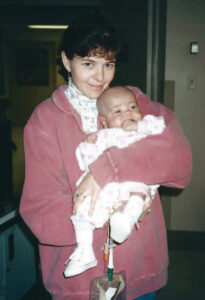
Sarah Marshall was born five and a half weeks early, and within 24 hours, her body was already sending distress signals.
Green bile. A gut that wouldn’t move. She was rushed to hospital where doctors diagnosed her with Megacystis Microcolon Intestinal Hypoperistalsis Syndrome (MMIHS), a condition so rare it affects only a handful of people in the world.
To understand what MMIHS means, picture the body’s most basic functions: the muscle contractions that push food from the stomach into the bowel, that empty the bladder. In Sarah, none of that muscle worked.
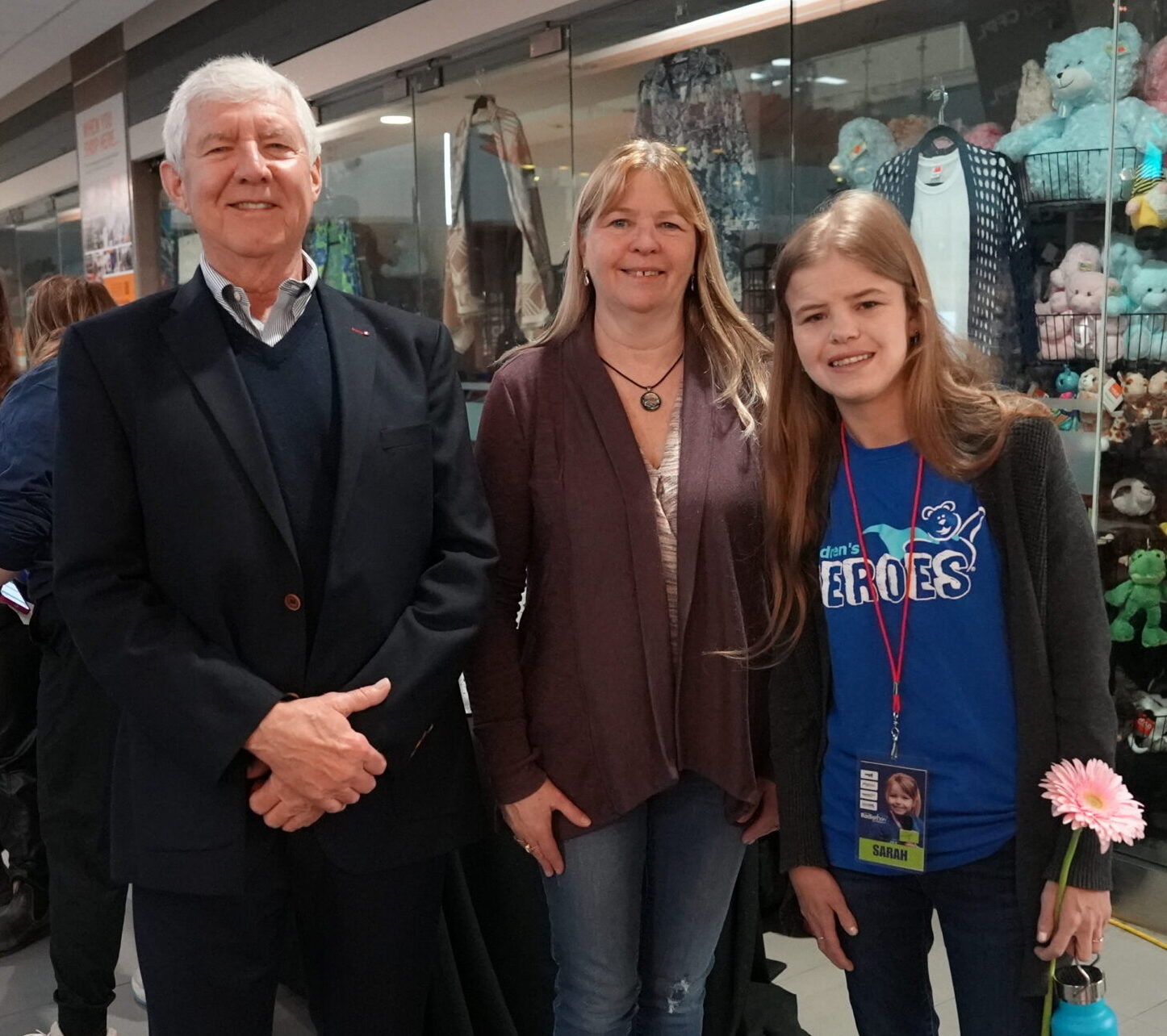
“She couldn’t empty anything out of her stomach into her bowel,” explains Dr. Paul Atkison, Former Director of Paediatric Transplantation at Children’s Hospital, LHSC, who has followed Sarah’s care from her very first days of life.
To survive, she would need to be fed directly into her bloodstream through a process called parenteral nutrition, bypassing her digestive system entirely.
For five months, that nutrition kept her alive, but it came at a cost.
“Almost 30 years ago, unfortunately, children who needed to be fed through their veins, many of them suffered from liver disease or liver failure,” says Dr. Atkison.
Sarah was one of them and by five months old, her liver was failing.
Transferred to London
Sarah spent the first few months of her life at a paediatric centre in her region before transferring her care to Children’s Hospital, London Health Sciences Centre (LHSC).
This meant the family made the three-hour drive to Children’s at the beginning of a journey that would span more than two decades and change all of their lives.
A first for Canada, at Children's
What the surgical team at Children’s Hospital was tasked with had never been done before in Canada and had never been done on anyone so young, anywhere in the world. Surgeons transplanted a stomach, pancreas, liver, and bowel into a five-month-old infant. Sarah today holds a Guinness World Records certificate to prove it.
“We’d never had anyone quite like her,” Dr. Atkison says simply.
"We had never done anything like this. It was groundbreaking."
Doctor Atkison
It was also terrifying. “There were a lot of challenges along the way,” he adds, “and we just had to make it work.”
They did.
A different kind of childhood
Sarah went home. She went to kindergarten. She went to prom.
“I did all the normal childhood stuff,” she says. “In saying that, my childhood was a lot different. We were juggling medications, IVs, doctor’s appointments, and clinics.”
For her mother, Cindy, that juggling act meant driving down Highway 401 between home and London, not once, not a handful of times, but for 22 years. What kept them coming back, beyond medical necessity, was something harder to quantify.
More than a medical team
“The team is consistent,” Cindy says. “It feels like home.”
At the Paediatric Medical Day Unit (PMDU), that feeling was literal.
“Not only did they know Sarah, but they also knew who I was. Typically, my dad was my sidekick that drove the roads with me, they knew who he was,” says Cindy. “They also met my son, who is ten years younger than Sarah. It felt welcome, safe and secure.”
Sarah felt it too.
"They saw me grow up. They became a part of my family."
Sarah

That bond, she believes, is what gets families through the hardest stretches.
“Take it day by day. There’s good, there’s bad. It will be tough, but if you take it day by day, especially at Children’s Hospital, the staff will guide you,” says Sarah. “They become your lifeline.”
Her mother echoes that.
“It’s a journey, and there were some really scary bumps in the road. Having people support you makes such a difference,” says Cindy.
"I don't know if we would have been here
without this [Children’s] hospital."Cindy
A milestone they weren't sure they'd reach

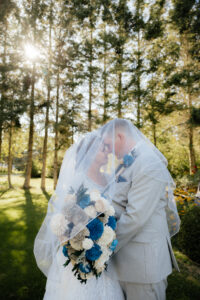
Last year, Sarah got married. Her doctor and his spouse were there to celebrate with her.
“It was very emotional. My wife and I were so honoured and excited to be there,” says Dr. Atkison.
For Sarah’s mother, the wedding was the kind of moment she had once been afraid to imagine.
“It’s one of those milestones we didn’t think we’d meet. It was a very teary, beautiful day.”
Years of tomorrows
Sarah is 29 now – though she likes to point out, with a smile, that her organs are 28. She has become a big sister. She watched her brother graduate. She is building a life that, by every medical measure of the mid 90s, should not have been possible.
“None of that would have happened,” Sarah says, “without the care I received 29 years ago.”
The paediatric medical equipment that Sarah uses to this day, much of it funded by community donations through Children’s Health Foundation, was there when she needed it as an infant and remains part of her adult routine. The staff who learned her name as a baby were there the day she got married.
Her mother says it best: “You don’t know if there’s a tomorrow. It makes you appreciate the small things.”
For Sarah, the small things are everything – kindergarten, prom, a wedding, a little brother’s graduation, a life partner, a future. Ordinary moments that are, in fact, extraordinary.
Each moment made possible by a team that, 29 years ago, looked at an impossible case and gave Sarah every tomorrow she has today.
Shannon Wise
Marketing Officer
swise@childhealth.ca


