Fight Against Time: First-of-its-kind Paediatric Rare Disease Registry

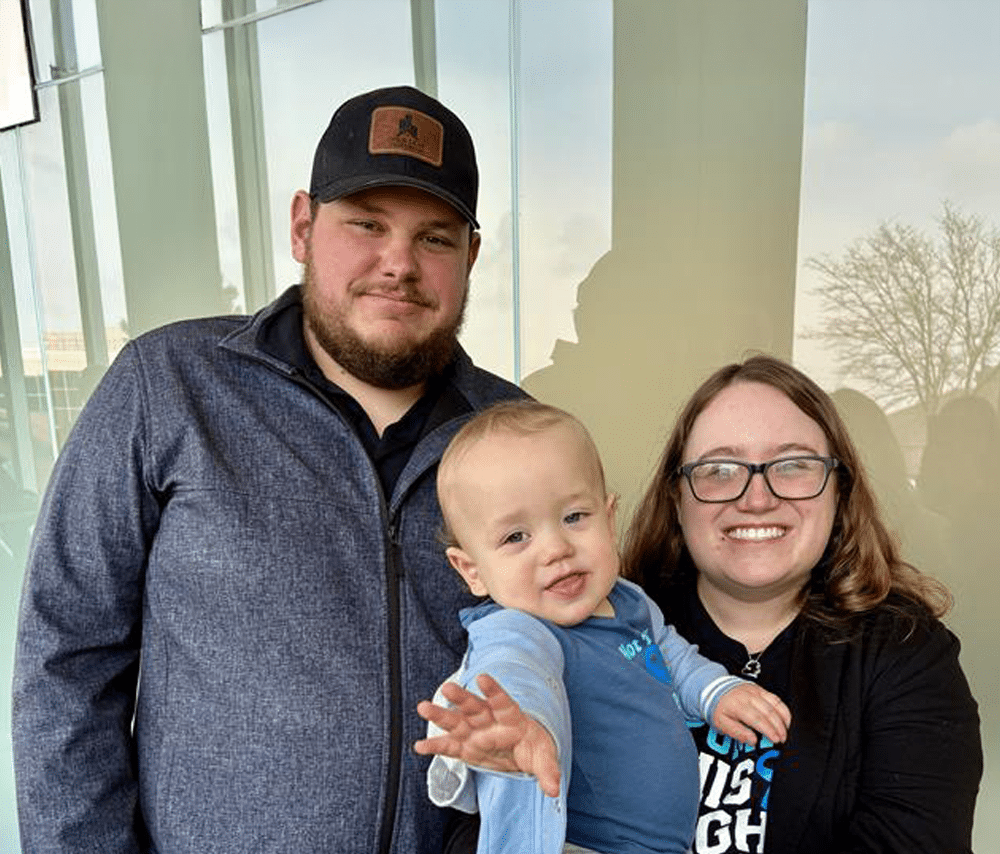
The morning Kaiden Babcock was born, his parents had no reason to expect what was coming.
He was small and new, and the world was just beginning. But within weeks, the word "rare" would change everything. 

At just one month old, Kaiden was diagnosed with Infantile-onset Pompe disease (IOPD) – a rare metabolic disorder – one that had already begun attacking his heart. “He probably wouldn’t have made it to three months without treatment,” his mother Rachel Babcock shares. “When he was born, he had severe cardiomyopathy.” In the Paediatric Progressive Care Unit at Children’s Hospital at London Health Sciences Centre (LHSC), doctors were direct with the family: the situation was critical. “They told us he might not make it.” 

He did. 

Enzyme replacement therapy – administered through infusions that stretch across seven hours – helped stabilize Kaiden’s heart. The treatment is demanding, both physically for him and emotionally for his family. But his parents have come to see those long hours not as a burden, but as a form of hope. “It’s so crucial,” says Rachel.

“It gives us hope that by doing those seven-hour infusions, we’re doing them to find better treatments, so that we can increase his quality and quantity of life.” 

Today, Kaiden loves music. He claps along to songs, plays with the family’s puppy, and fills a room with the joy of a child who has been fought for.

His metabolics team at Children’s Hospital has become, in his mother’s words, “like a second family to us.”

“We can always reach out to them for anything.”

A rare reality

Kaiden’s story is one of roughly 1 in 12 in Canada; the proportion of Canadians living with a rare disease. It sounds like a small fraction until you do the math – that’s nearly three million people. Seventy per cent of rare diseases are genetic in origin and are diagnosed in childhood, making paediatric medicine both a frontline and a proving ground in the fight to understand them. 

At Children’s Hospital, rare diseases span every specialty, from cardiology and metabolics to neurology, respirology, and beyond. The breadth reflects the nature of these conditions: they don’t follow predictable patterns, don’t cluster in convenient categories, and don’t wait. For most, there is no cure, and many don’t have effective treatments. The effect on families can be profound; reshaping daily life, careers, relationships, and futures in ways that are difficult to anticipate and harder to prepare for. 

Building the tools to fight back

That weight is exactly what drove the creation of the Southwestern Ontario Rare Disease program, known as SWORD. Launched through Children’s Hospital, SWORD is building what will be the first paediatric rare disease registry in Canada – a foundational tool for tracking outcomes, accelerating diagnoses, and connecting patients to research. The work is funded through Children’s Health Foundation (CHF), and it reflects a growing recognition that data, carefully and compassionately gathered, is one of the most powerful tools. 

The registry matters because time matters. The earlier a patient receives a diagnosis, the better their outcomes tend to be, a truth that makes every delay costly and every innovation in diagnostics worth pursuing. Researchers at Children’s Hospital Research Institute (CHRI) are working on both fronts.  

Dr. Sunita Venkateswaran is a key figure within the Rare Disease Team, bringing an international dimension to that work, collaborating with colleagues around the world on diagnostics and treatment research that has implications far beyond Southwestern Ontario. 

“Early diagnosis is critical because many treatments and supports can only begin once we know what condition a child has and many of these treatments have a small window,” explains Dr. Venkateswaran, a paediatric neurologist at Children’s Hospital. She works alongside families as they move through what can be an overwhelming and isolating process: from the first suspicion that something is different, through the long road of testing and specialist appointments, and into the daily reality of managing a condition that most people have never heard of. It is support that is hard to quantify and impossible to replace. 

A gift born from gratitude

When Kaiden was in the NICU, he needed to be held constantly, the way some babies do when the world outside the womb still feels too large and too uncertain. His parents were there as often as they could be, but in the quiet moments between visits the nurses stepped in, holding him between their other tasks, keeping him calm. 

Last December, Kaiden’s family donated a Mamaroo (a motion-based infant seat) to the NICU in his honour. “We know that there’s not enough for how many babies there are,” says Rachel. “Because he wanted to be held all the time and we couldn’t always be there, the nurses had to hold him.” 

It is a small gesture with a long memory behind it. A family giving back to the place that supported them during their most difficult moments. 

Hope Lives at Children's

For families like Kaiden’s, Children’s Hospital, is more than a medical institution. It is the place where the worst news arrived and where the work of surviving it began. It is where researchers are building registries that will one day make diagnoses faster, where navigators sit beside parents in the hardest moments, and where seven-hour infusions are understood not as routine, but as remarkable acts of persistence and love. 

As a geneticist at LHSC, Dr. Tugce Balci has built her career around a single purpose – giving the hospital’s youngest patients, like Kaiden, a better chance at a healthier future. “The registry will help us understand those numbers and the needs of these families. It will also help connect patients with the right specialists and researchers within Canada and internationally. 

"Importantly, when companies or researchers want to start a clinical trial, the first question they ask is how many patients with a specific condition we have. This registry will allow us to answer that and bring new research and therapies to our region."

One in twelve Canadians lives with a rare disease.

But behind every statistic is a child who loves music, who claps along, who has a puppy waiting at home, and a family that simply refuses to stop hoping. 

Become a Board Member for Children's Health Foundation

This is a meaningful opportunity to contribute your skills, experience, and passion to improving children’s health care.

Board members play a vital governance role by providing leadership in strategic direction, policy development, fiduciary oversight, and fundraising.

Apply by February 6, 2026