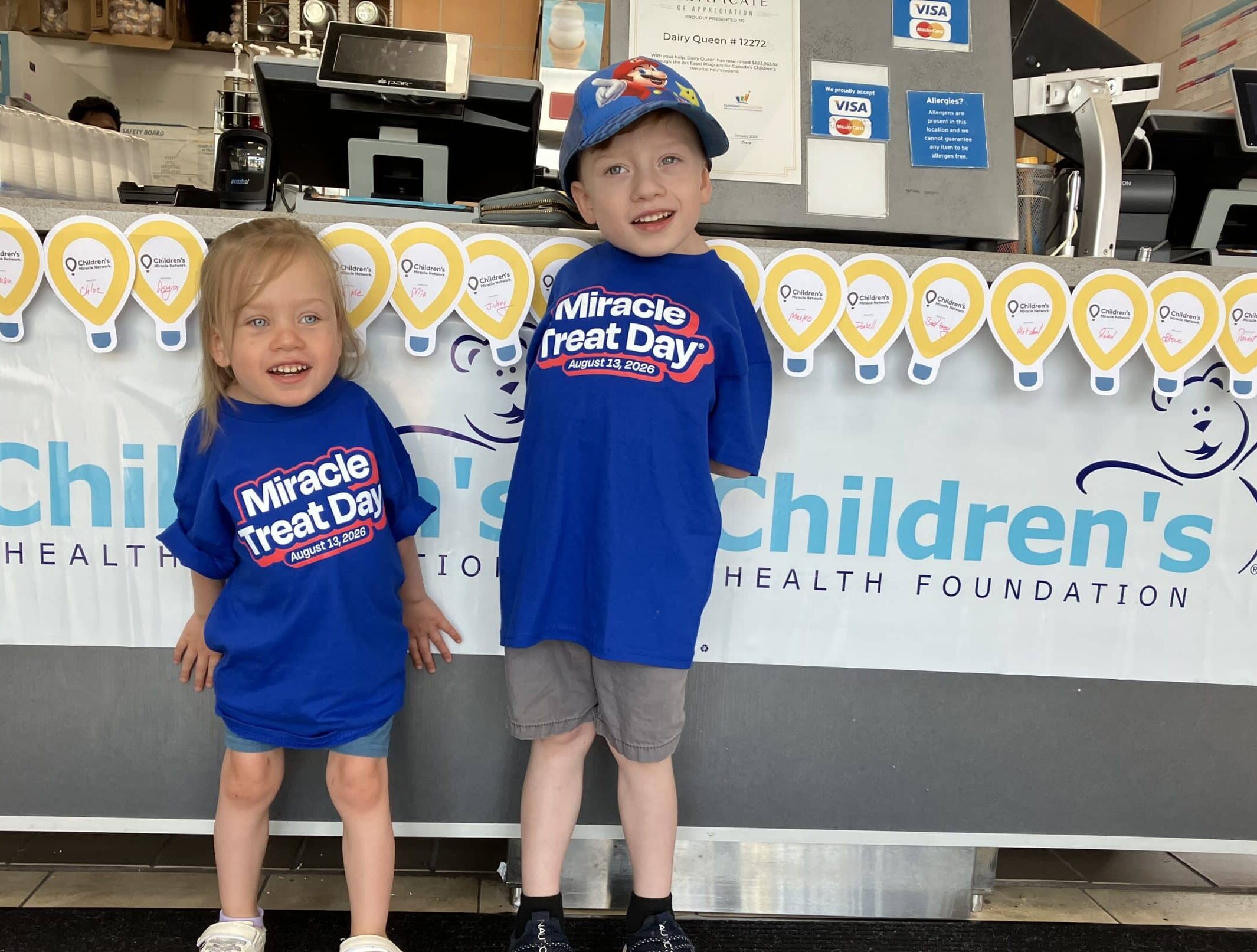
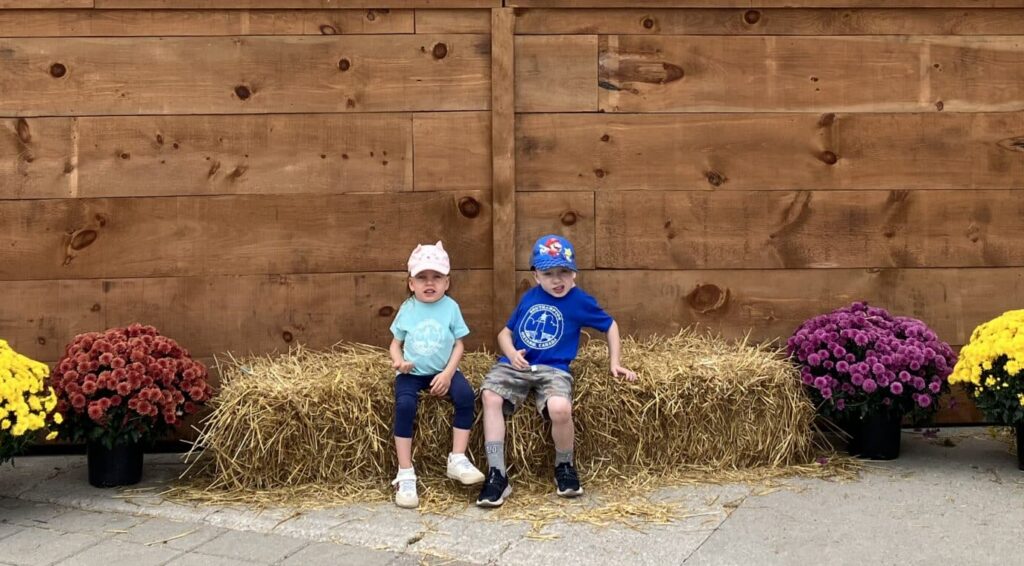
John is 6 and just started Grade 1. He loves LEGO, riding his bike, video games, and losing himself in pretend play. His little sister Charlotte is 4 and just started JK. She’s a self-described girly girl who adores Cinderella, colouring, and – more than anything – her big brother. “She idolizes him,” says their mom, Amanda. “She just wants to be with him all the time.”
What sets John and Charlotte apart from most siblings is a rare congenital spinal condition they both share, one marked by significant curvature and deformed vertebrae. Doctors suspect a genetic cause, though testing has so far been inconclusive. The family is enrolled in a rare disease registry through the Southwestern Ontario Rare Disease Program through Children’s Hospital, LHSC, in hopes of one day finding answers.
John's Journey
Doctors first noted a prenatal condition that later resolved on its own, but John was eventually diagnosed with severe kyphosis and scoliosis, a spinal curve of roughly 90 degrees that put him at risk of spinal cord injury. His care has included MRI and CT imaging, a period in halo traction, surgery to remove deformed vertebrae and fuse his upper spine, and ongoing growing rods that require lengthening surgery every six to nine months until he stops growing.
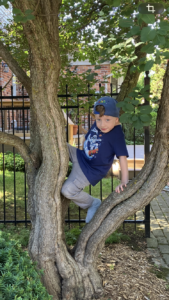
This past July, John had his second lengthening surgery. “It went really well,” Amanda says. He spent just one night in hospital – and used it to put on a concert for the nurses, drawing up tickets and borrowing a toy guitar from Child Life. “His confidence came back so quickly. He just started riding his bike at the beginning of September, and now he rides it to school.”
The growing rods brought other changes too: John was immediately taller, and his appetite improved dramatically. Child Life has also stepped in to support his anxiety around upcoming procedures, offering coping strategies the family can lean on. John is likely facing another surgery in early 2027.
Charlotte’s Journey

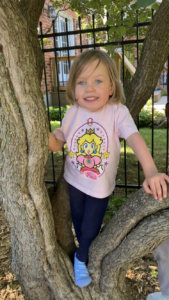
Because of John’s history, Charlotte was tested at just three weeks old and doctors identified her scoliosis early. Her curvature involves an even more deformed vertebrae than John’s, though her kyphosis is less pronounced. A recent MRI brought reassuring news: her spinal cord looks healthy, and the family can wait and watch how her curve changes over the coming months. But she needs to grow bigger before surgery is possible, and she’s growing slowly, a bittersweet catch-22, since slower growth also means slower progression.
Charlotte also faces feeding challenges; clinicians believe her spinal curvature compresses her stomach. She receives three tube feeds a day through a G-tube, supplemented by whatever solids she’s able to eat, with gastroenterology and a dietitian following her closely. “When Charlotte has her scoliosis surgery, we’re very interested to see whether or not she’ll still need the feeding tube,” Amanda says. “We just don’t know when.”
A Typical Morning
Life for this family starts long before most households are awake. “Most kids don’t have to get up two hours before school starts to have a feed,” Amanda explains. Charlotte is hooked up for about an hour, at the rate and volume she’s currently at, before she’s dressed and ready for the day – while her parents divide and conquer, one managing the feed, the other cleaning medical equipment. Charlotte is just starting to notice she’s a little different from her classmates.
The Hardest Part
For Amanda and her husband, Rob, the hardest part isn’t any single surgery or appointment – it’s watching their children live with pain and long hospital stays and finding the words to explain it all to a young child.
“With John, if he’s having an off day, we say it’s okay to feel that way, try not to let it ruin your day. It’s crummy, there’s no way around it.”
Small moments of distraction have made a real difference: Child Life bringing action figures, nurses organizing a bug scavenger hunt around the B ward or tracking down a brand-new dinosaur LEGO set to bust the boredom during a hospital stay.
A Message to Donors
Amanda and Rob hope that by sharing their story, they can help other families feel less alone – and help their own children feel accepted rather than “different.”
When Amanda thinks about the impact of donor support, one memory stands out immediately: the light-up wheelchair John received. “He was scared to get in the chair the first time. Then he was a little less apprehensive when he saw the lights…that was a huge help for him. The second time, he recognized the chair and said, ‘That’s my chair.’ No fear at all.”
That chair helped ease John’s anxiety around unfamiliar equipment and gave him the freedom to get out and about.
“Knowing that at Children’s Hospital that kind of technology exists, and that you have medical staff using it in ground-breaking ways – we were so thankful to have professionals like that.”
Amanda

Above all, Amanda and Rob hope their children grow into kind, empathetic people – and that the care they’re receiving today allows them to grow up active and fulfilled, within their own abilities. “We just want them to be good little humans at the end of the day.”
Shannon Wise
Marketing Officer
swise@childhealth.ca


